
Dunedin Previous Resident Sources
A sound address history uses different sources for different periods. The Pinellas County Property Appraiser supplies the current parcel, while the Clerk's recorded instruments carry title backward. Occupancy takes more work. A deed names parties to a transfer, not each person in the home. Dunedin Times notices, reverse directories, census schedules, and permits can place a household or event at the site.
| Source | Local coverage | Where held | Evidence found |
|---|---|---|---|
| Acclaim official records | January 1, 1957 to present | Pinellas Clerk online | Deeds, parties, dates, book/page, legal descriptions |
| Earlier deed and index books | Before 1957 | Clerk counter, archives, or film | Grantor-grantee chain and recorded transfers |
| PCPA parcel and sales data | Current roll; sales depth varies | Property Appraiser | Owner, separate site and mail addresses, prior owners, deed links |
| Dunedin Times | Complete 1924-1966 museum run | Library and History Museum | Occupants, sales, obituaries, business and social notices |
| Federal census | Public through 1950 | NARA and library databases | Household members, relationships, ages, and address context |
| City and reverse directories | Exact Dunedin years need shelf confirmation | State Library and county libraries | Name-to-address and, in reverse sections, address-to-occupant |
| Permits and plans | Digital start not verified | Dunedin or Pinellas request | Work dates, owner, applicant, contractor, inspections |
For a recent Dunedin address, start with the parcel and deed links. For the mid-century period, combine deeds with the newspaper and the public census. Earlier work may cross a county boundary in time: Pinellas County was formed from Hillsborough County in 1912, so a very old Dunedin land trail can continue in Hillsborough predecessor indexes.
Start Dunedin Address History Today
Search the situs address in the Pinellas County Property Appraiser Quick Search. Situs means the physical location of the parcel. Record the STRAP parcel number, short legal description, current owner, owner mailing address, last deed, and each sales-history row. Keep mailing and site addresses apart. An out-of-state mailing address may fit Dunedin's seasonal ownership pattern, but it does not show whether the dwelling is vacant or occupied.
The parcel number and legal description are more stable than the way a street name is typed. Platted lots often use subdivision, block, and lot. That wording is the bridge between the assessor and recorded deeds. It also protects the previous-residents trail from alternate road names, subdivision replats, or postal labels that do not match city limits.
Note: A homestead exemption supports owner occupancy for a tax year, but it is not a complete list of people in the home.
Walk Pinellas Deeds Backward
The current purchase deed begins the chain. In the Pinellas Acclaim official-records index, confirm that the current owner appears as grantee, meaning the buyer or recipient of title. Capture the grantor, execution and recording dates, instrument or book/page, and full legal description. Then work back one transfer at a time.
- Open the last deed linked from the Dunedin parcel card and match its legal description.
- Search that deed's seller, or grantor, as a grantee in an earlier date range.
- Restrict results by deed type, then compare lot, block, subdivision, and book/page references.
- Repeat the buyer-to-seller handoff until the online records stop.
- For older title, ask the Clerk for the pre-1957 grantor/grantee index and deed books.
- Grantor and grantee
- The grantor gives or sells an interest. The grantee receives it.
- Chain of title
- The linked sequence of transfers for the same parcel.
- Legal description
- The recorded land identity, often subdivision, lot, and block, that is more reliable than a street address.
- Criss-cross directory
- A directory arranged by street and house number instead of a resident's surname.
Dunedin Records Cross Two Breaks
The date January 1, 1957 is a practical line, not the birth of the record. Acclaim reaches that date online. Earlier instruments may still exist in grantor/grantee books, deed books, plats, or microfilm at the Clearwater Courthouse. Official Records is in Room 163 and Recording Services is in Room 150 at 315 Court Street. Call the Clerk at 727-464-7000 before traveling and ask where the needed book or film can be viewed.
Another break comes in 1912, when Pinellas County was created from Hillsborough County. A Dunedin title or court trail before county formation may continue under Hillsborough. This local history matters more than a failed web search. No authoritative evidence of a catastrophic Pinellas courthouse loss was found in the research, so do not assume missing online material was destroyed.
Index searches are free. Copies, certification, and staff research may have charges under the live Pinellas Clerk fee schedule. If an Acclaim image fails, switch the image viewer to TIFF before concluding that no scan exists.
Match Dunedin Past Households
Owners are only one part of a previous-residents search. A reverse directory may list the occupant and telephone at a house number. A name-arranged directory may add a spouse, occupation, and residence. The exact Dunedin publisher and year run has not been verified publicly, so ask the Dunedin Public Library or State Library reference desk for an inventory before citing a volume.
Pair each directory entry with the nearest public census year. The latest open federal population census is 1950. A useful flow is: address in a reverse directory, then household on a nearby census page, then deed owner for the same date, followed by newspaper or probate evidence. Keep ownership and occupancy in separate columns. The Dunedin city directory collections are covered in more depth on their own page.
- Copy the directory's exact house number, resident spelling, spouse, and publication year.
- Find the nearest census schedule and browse nearby entries when transcription misses the address.
- Compare the deed owner for that date without assuming the owner lived there.
- Search the paper by surname, spouse, employer, and street fragments to resolve gaps.
Dunedin Times Preserves Resident Stories
Dunedin has an unusually strong local newspaper trail. The Dunedin History Museum reports that it holds the only complete Dunedin Times run from 1924 through 1966, with a less complete later run until the paper ended around 2000. The Library offers a searchable 1924-1961 interface and a browsable 1924-1965 run. Those sources can place a family at an address through social notes, sales, business items, obituaries, and property notices.
Use the Dunedin Library eResources and the History Museum archive. Newspaper OCR can fail on narrow columns. Try the street number, a spouse, an employer, or part of a road name when the surname produces nothing. A news item is context, not a title instrument, so connect it back to the deed or parcel record.
Note: The complete local newspaper run makes mid-century Dunedin house research far richer than the city-directory shelf alone.
Date a Dunedin Building
Permits add the building's own timeline. Search the site address or parcel in the applicable permit system, then request the offline jacket, inspection history, plans, or address-change file from Dunedin when the portal does not reach far enough. A permit may name an owner, applicant, contractor, type of work, inspection date, and completion event. None of those roles alone proves who lived in the structure.
Sanborn fire-insurance maps may show a building footprint, materials, use, and older street layout. The research did not verify exact Dunedin sheet years, so check Library of Congress or University of Florida catalogs without claiming a hard range. Plats and legal descriptions are safer bridges across changed street names, Edgewater or Bayshore routing, U.S. 19 alternatives, Martin Luther King Jr. Avenue forms, and annexed land.
Close Dunedin Resident Trails
Obituaries, cemetery records, and probate can explain why a name leaves the address chain. HeritageHub and the Dunedin Times supply leads. A public Pinellas probate docket may identify a decedent, personal representative, heirs, and filed events, subject to redaction and document-access rules. Cemetery interment and lot records can add a burial date, but a plot purchaser is not always the person buried there.
Florida vital records have different access rules. Birth records less than 125 years old are confidential. A death certification without cause is broadly available, while cause-of-death information remains restricted for 50 years to eligible applicants. Marriage and dissolution certifications are generally public, and statewide coverage begins June 6, 1927.
The official application pages show the current forms and eligibility rules. The birth certificate page illustrates the restricted route.
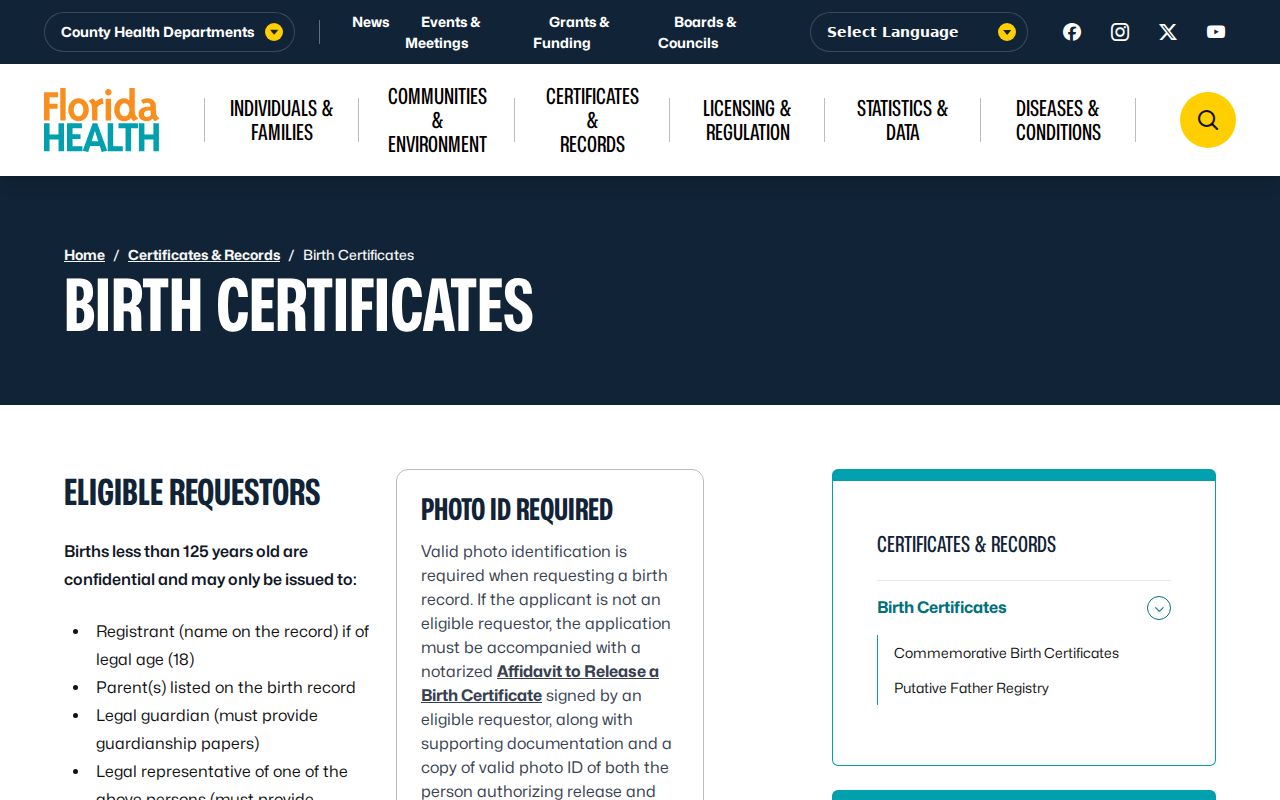
The screen is a reminder that a historical address does not override state limits on a living person's birth record.
For a deceased resident, review the Florida death certificate options.
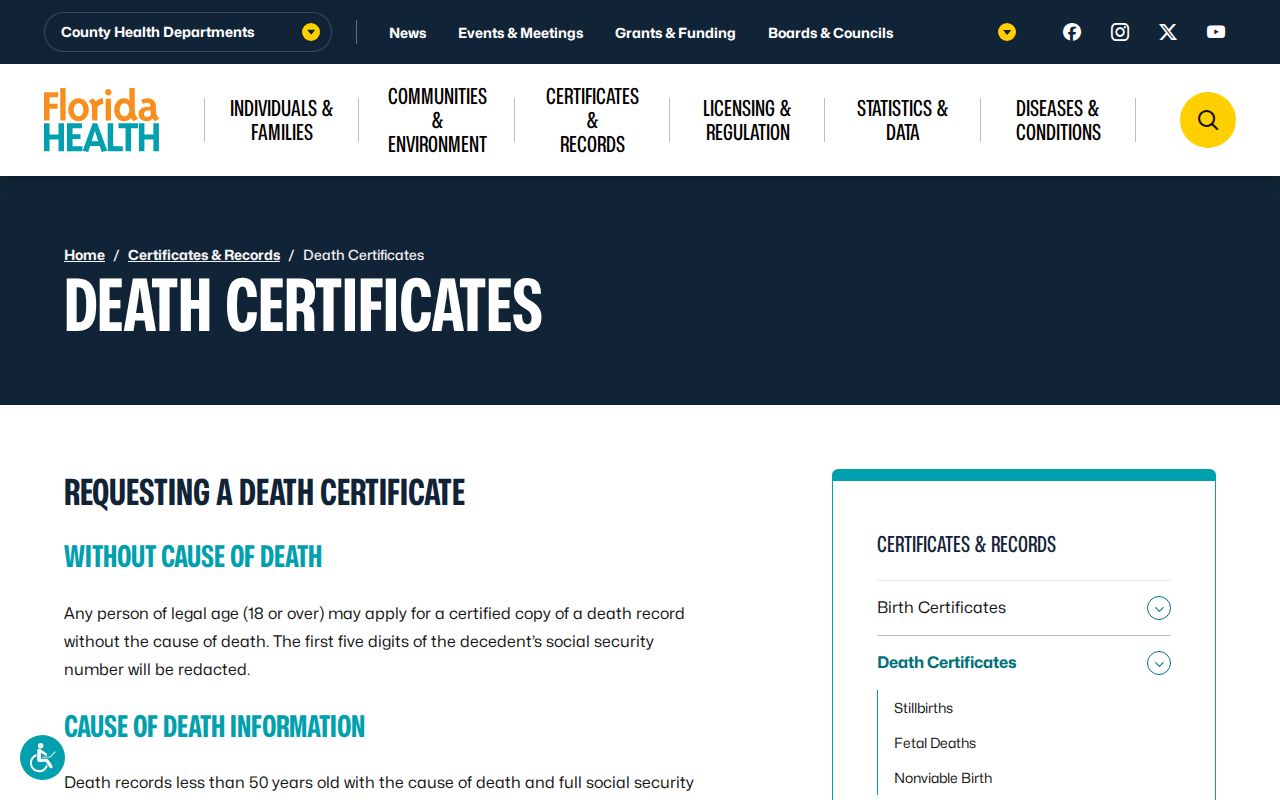
Choose the version with or without cause based on eligibility and research need.
Dunedin Family Record Cross-Checks
A marriage can confirm a surname shift or household relationship. Use the Florida marriage certificate channel for statewide reports in its coverage period.
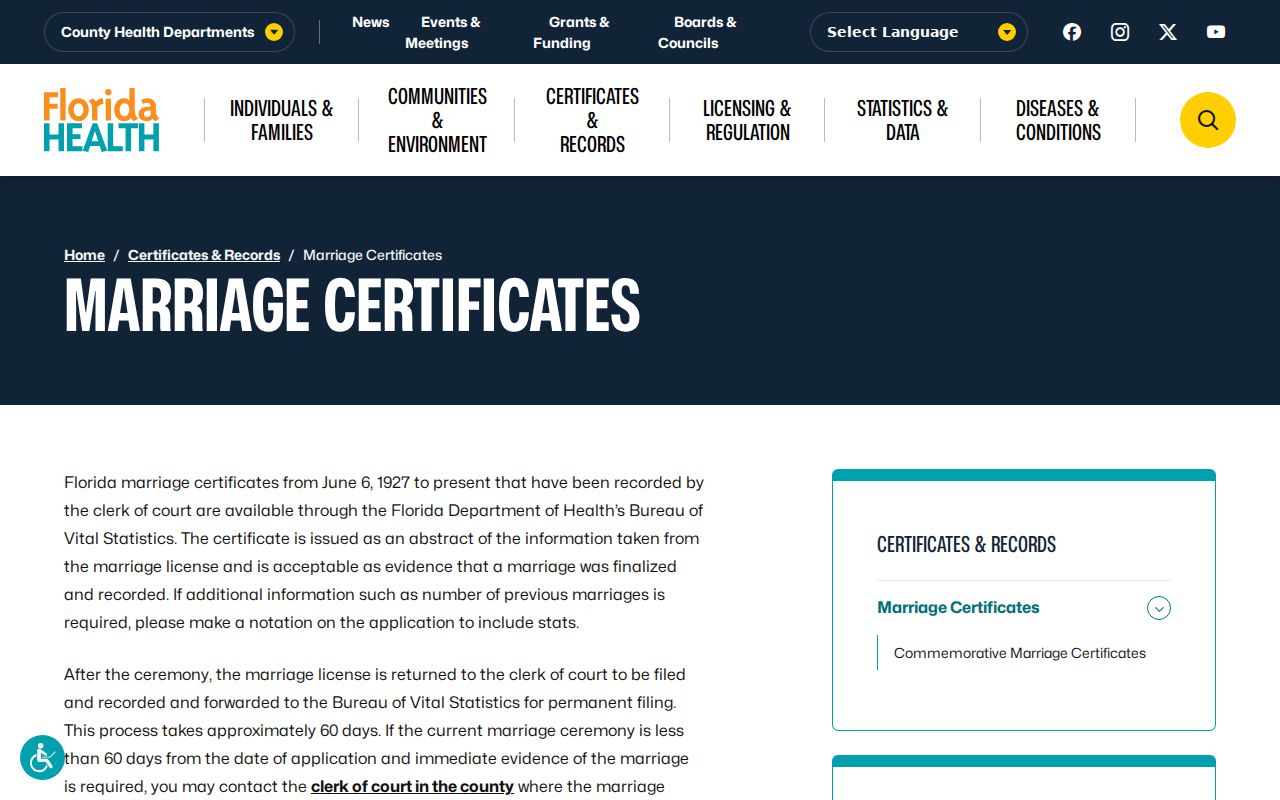
For a license issued in Pinellas, the Clerk may provide faster access and holds pre-statewide material.
A dissolution summary confirms parties, date, and county, but not the full decree. The Florida dissolution certificate page explains that narrower record.
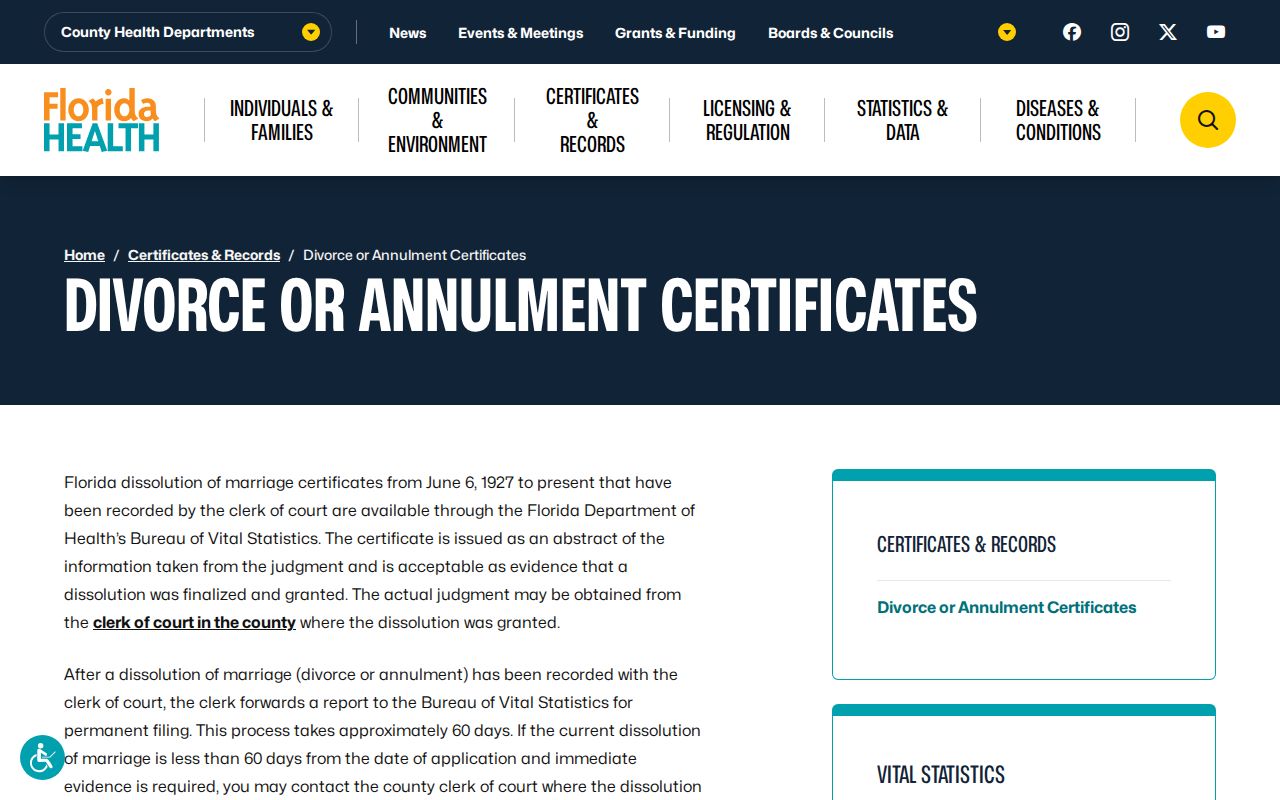
When more detail is needed, the permitted Pinellas court file is the controlling source.
Federal litigation or bankruptcy may occasionally contain a property exhibit. Search PACER only when the address trail points to a federal case.
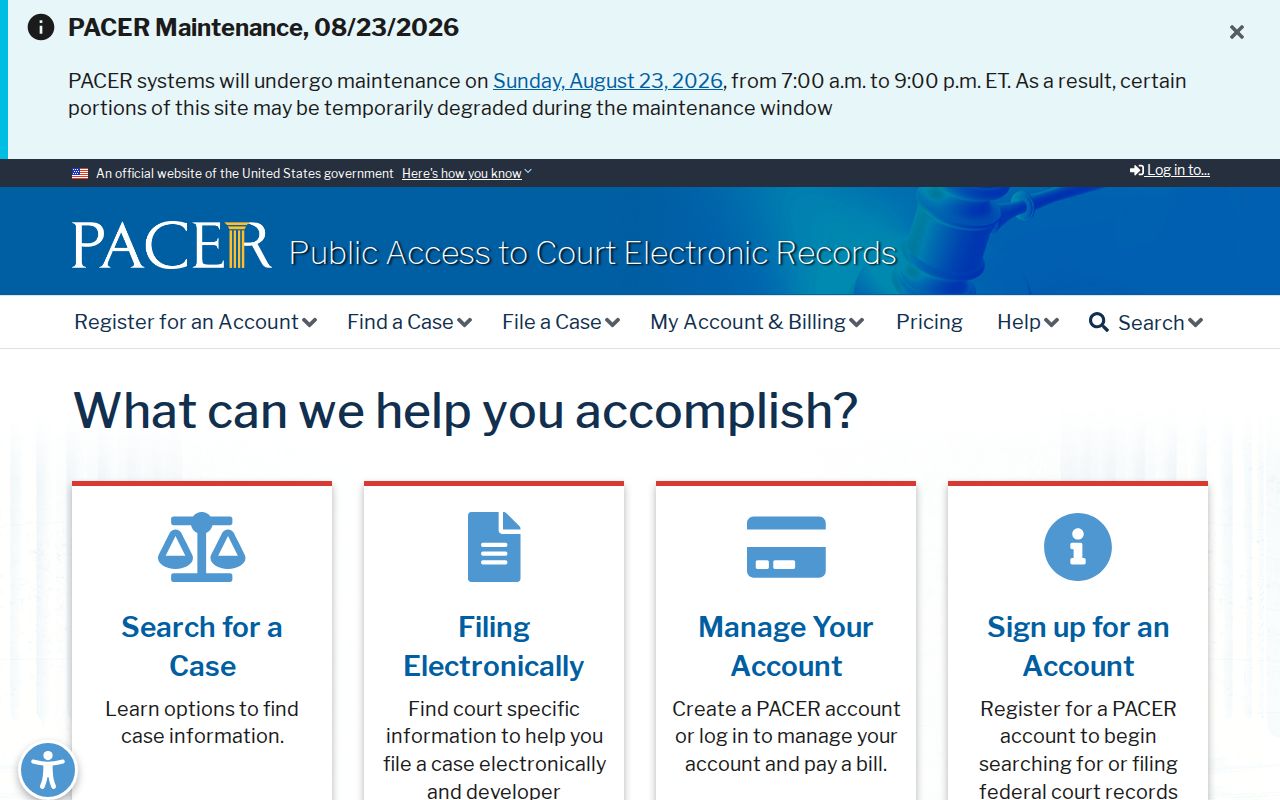
PACER is not a substitute for the Pinellas deed index, and federal access requires an account with usage fees under its rules.
Use Previous Residents Records Lawfully
Past household research is useful for genealogy, house history, estate questions, and understanding a building's story. It should preserve dates and source roles. A person named as grantor, contractor, heir, or newspaper subject was not necessarily an occupant. Protected addresses and sealed records must stay protected, even if another record seems to hint at the same place.
Lawful use. Use Dunedin previous-residents records for house and family history, never to track, threaten, or harass a living person.
When an online record ends, ask for a named series, date range, address, parcel, or instrument. Florida agencies must provide existing nonexempt records, but they do not have to build a new family tree or answer an open-ended research question.